Invitation
My dinner party invitation was sent out on the day that Watergate took place, and the event is being held on the day Nixon resigned. I wanted to have the party on the day he resigned because of the scavenger hunt aspect to it. The guest will participate in a Watergate-themed scavenger hunt. Each team will put their Watergate knowledge to the test and race to gather the clues that tell where President Nixson hid the tapes with evidence of his crimes. Since the goal of the scavenger hunt is to bring President Nixson down, I thought the date should be held on the anniversary of his resignation.
The first person I decided to invite is Bob Woodward. Bob Woodward is one of the reporters that helped uncover Watergates' secrets. Working for The Washington Post, he made it known to the public that The White House was connected to the break-in at The Democratic National Head Quarters. I think he would provide an extremely unique view on what it was like trying to find information on this scandal. Hopefully, his memory will serve him well in the scavenger hunt.
The next person I am going to invite is Robert Redford. Robert Redford is an actor who played Bob Woodward in the movie All the President's Men. The teams for the scavenger will be pared, and I plan to put Bob Woodward and Robert Redford together. I think I will be interesting to see how knowledgable Robert is of Watergate and if his knowledge is correct. It would also be a cool experience for him to meet a person he portrayed in a movie.
The next person I am going to invite is Carl Berstein. Carl Bernstein is also another reporter for the Washington Post who helped uncover info on Watergate. I think it will be interesting to hear Bob and Carl recount their experiences regarding Watergate together. It will be interesting to hear if they thought the movie had an accurate portrayal of what it was like working in the Washington Post.
Dustin Hoffman is another person I am going to invite. Dustin played the role of Carl Bernstein in All The Presidents Men so similarly to Bob and Robert, I think It would be cool for him to meet the person he portrayed on screen. Carl and Dustin will also be paired together for the scavenger hunt.
The party would not be complete without a historian, so I thought who else other than my history teacher Mrs. Lawson would be better suited for this. The answer is nobody. When I think of the word "educated" Mrs. Lawson comes to mind. It seems like there is nothing that she doesn't know or can't figure out regarding historical or political topics. This is why she is the best fit to attend this party. I believe that she will ask the guests very interesting questions which will create great conversations.
Next up on the guest list is Mark Felt a.k.a "Deep Throat". Felt provided vital information to Bob Woodward regarding the scandal. It will be nice for them to reconnect at a dinner party and not at a shady parking garage in the middle of the night.
The next person I will be inviting is Walter Coblenz. He is the producer of All The Presidents Men. I think it will be interesting to hear the conversations regarding how he chose to portray the Watergate scandal and how his choices of elements like lighting, sound, and dialogue style help support themes.
The last person I will invite is President Obama. I think it would be a good idea to have a presidents perspective on the Watergate situation. He could provide insight into the differences between the government in the past and what it looks like to be President in recent times.
Sunday, May 12, 2019
Wednesday, May 8, 2019
Monday, April 15, 2019
These documents from 1962-1980 are on the topic of The Environmental Movement. Each document projects that if changes are not made, humans will be responsible for the downfall of the environment. Rachel Carson wrote a book called "Silent Spring" in response to the pesticides being irresponsibly placed anywhere contaminating water supplies for animals. Another document includes a section of President Nixon's State of the Union Adress. A quote from this reads "We can no longer afford to consider air and water common property." These documents are creating a narrative that individual people should be held accountable for there actions regarding the environment. 
| Pesticides being sprayed |
Tuesday, April 9, 2019
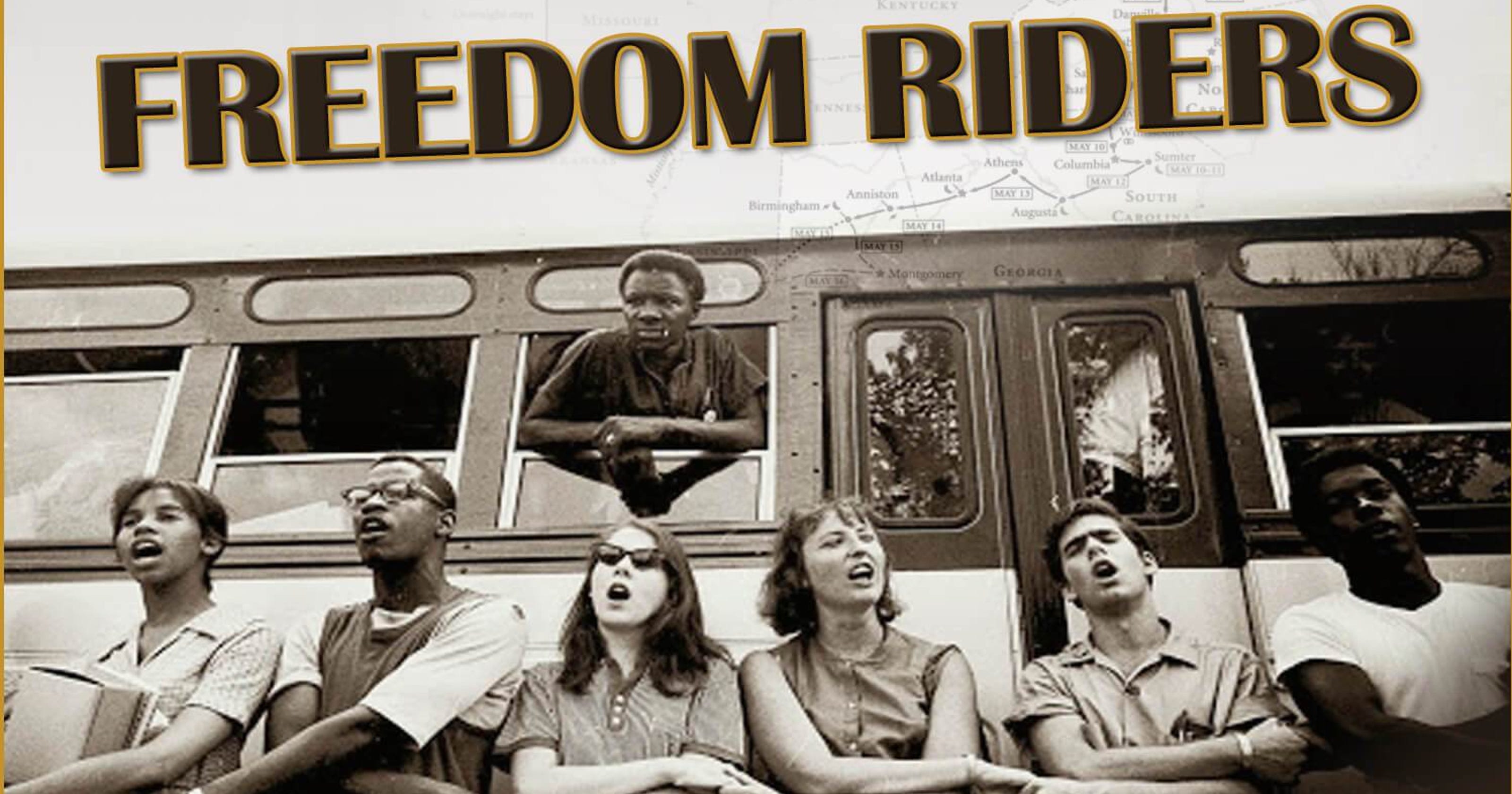
The Freedom Riders
| Link |
![]() |
| Link |
The Freedom Riders had to endure two more attacks in Alabama. One was in Birmingham. The public safety commissioner, Bull Connor, claimed that he knew the freedom riders would be coming, but he decided not to set up any measures of protection because it was mother's day. CORE members on the buss backed out from going further because it was too violent. However, the SNCC (Student Nonviolent Coordinating Committee) took their place. These students had to face the horrible mob in Montgomery, Alabama. Later on, many African Americans were arrested of "disturbing the peace". They were sent to Parchman Penitentiary and stayed there for 39 days. Finally, the supreme court recognized the problem and regulations were put in place forbidding the segregation of the bus systems.
I wanted to compose a piece of music inspired by the bravery and the story of the Freedom Riders. I knew that I wanted to have a section in the music that had a lot of motion. The progression of the buses and the civil rights movement was the reason that I wanted that motion in the music. Next, I wanted to include music that the Freedom Riders sang while on the bus. Music played a very important role in the civil rights movement. It unified everyone when they were in jail, and it kept them going through hard times. I have always loved some of the gospel songs that came out of African American culture. Something about singing them is therapeutic and healing. I wanted to create a similar comforting feeling when including one of the songs in my piece. I chose "Hallelujah I'm a Traveling". When I listened to it, it was being sung with no harmony, but I was able to hear the potential and power it could have. I placed it following an intense sounding part of the piece because its purpose was to comfort the people who were riding on the bus. Finally, I wanted to include the famous song "America the Beautiful", but change the harmonies to make it sound like something wasn't quite right. The irony of it points to the glaring racism that was going on in America at the time. When putting the whole piece together, I took inspiration from "A Movement For Rosa" by Mark Camphouse and "City Trees" by Michael Markowski.
Link to score and playback:
https://musescore.com/user/19237061/scores/5520984
Sources:
https://www.nps.gov/nr/feature/afam/2012/montgomery_greyhound_bus_station.htm
http://www.encyclopediaofalabama.org/article/h-1605
https://www.history.com/topics/black-history/freedom-rides
https://www.loc.gov/collections/civil-rights-history-project/articles-and-essays/music-in-the-civil-rights-movement/
https://musicedmasters.kent.edu/the-role-of-music-in-the-civil-rights-movement/
https://www.youtube.com/watch?v=2p2TcmXveOo
Thursday, March 28, 2019
The Lynching Memorial was very powerful. It was also interesting to see how much thought went into the planning. Everything seemed deliberately placed in order to convey their emotions through physical structures. The first museum we went to has lots of information and it really made me angry looking at the wall full of signs that said: "whites only".
One, in particular, was an add for a place that listed good things on one side like good weather, nice beaches, and then on the other side, it said no black people. It is a horrible thing to feel unwanted and for black people, or any other person who wasn't white and Christian, it was thrown in their faces.
![]() |
| Link |
Friday, March 8, 2019
2.7: Mid-Semester 2 Reflection
1. The most important thing I learned about immigration in the 19th century was the push and pull factor and why immigrants decided to leave their home country. Understanding why people immigrate might help to get a better idea of what's going on in the country and what people value.
2. The most important thing I learned about immigration today is that the US government does not care about the well being of immigrants. I already knew this in a way, but I also learned that they aren't really hiding this fact. I'm not talking about the Trump administrations belief on immigrants and how we need a stricter border, I'm talking about how they treat them as people. I learned that it is an official policy of immigration to use kids as bait to catch illegal immigrants. No matter what a person believes about immigration, they are still people too and they don't deserve to be treated like that. Separating families is not ok on any level.
3. The two most challenging aspects of living in the 19th century are the overcrowded cities and bad sanitation. People were rapidly moving to cities and they had not figured out a good sanitation system in any regard, so health was an issue. In the 19th century. In the late 19th century, there were highly successful people like Carnegie and Rockefeller. Based on data we looked at, the richest people to live were born in the 19th century.
![]() |
| Link |
Wednesday, March 6, 2019
Philanthropy is defined as the desire to promote the welfare of others, especially by the generous donation of money to good causes. Charity is similar to philanthropy but there is a difference. Charity is a short term response. Charity doesn't solve any problems in the long run. Philanthropy is more about solving problems. link
Carnegie donated money for projects that helped teachers and education. He gave 125 million dollars to help colleges and schools. He also gave money to over 2000 libraries. By 1911, he had given away 90% of his money. He believed that the rich had an obligation to help others less fortunate than they were. Link
Rockefeller gave away 540 million dollars in his lifetime. link Carnegie gave away 350 million dollars. link
Carnegie foundation branches include council for ethics in international affairs, Dunfermline trust, the endowment for international peace, the foundation for the advancement of teaching, Carnegie Hall, the institution for science, the library of Pittsburgh, Carnegie Mellon University, Carnegie Museums of Pittsburgh, trust of the universities of Scotland, the UK trust, The Hero fund commission, and other international foundations. link
Warren Buffett is a major philanthropist today. He pledged to give 99% of his wealth away to churches and schools. Link
If I was a Philanthropist, I would definitely give money to help the arts departments in schools in lower income areas. The arts are very important and there is a lot of research that supports this. Some schools don't have a budget to foster a good band or theatre program. Money isn't everything, but it helps these departments to grow and exist. Without a substantial budget, it is harder to expand a band program and get more people to join. Instruments and equipment have to be paid for along with trips and festivals. The arts can provide a wonderful experience for kids in schools.
Carnegie donated money for projects that helped teachers and education. He gave 125 million dollars to help colleges and schools. He also gave money to over 2000 libraries. By 1911, he had given away 90% of his money. He believed that the rich had an obligation to help others less fortunate than they were. Link
Rockefeller gave away 540 million dollars in his lifetime. link Carnegie gave away 350 million dollars. link
Carnegie foundation branches include council for ethics in international affairs, Dunfermline trust, the endowment for international peace, the foundation for the advancement of teaching, Carnegie Hall, the institution for science, the library of Pittsburgh, Carnegie Mellon University, Carnegie Museums of Pittsburgh, trust of the universities of Scotland, the UK trust, The Hero fund commission, and other international foundations. link
Warren Buffett is a major philanthropist today. He pledged to give 99% of his wealth away to churches and schools. Link
If I was a Philanthropist, I would definitely give money to help the arts departments in schools in lower income areas. The arts are very important and there is a lot of research that supports this. Some schools don't have a budget to foster a good band or theatre program. Money isn't everything, but it helps these departments to grow and exist. Without a substantial budget, it is harder to expand a band program and get more people to join. Instruments and equipment have to be paid for along with trips and festivals. The arts can provide a wonderful experience for kids in schools.
Subscribe to:
Comments (Atom)